
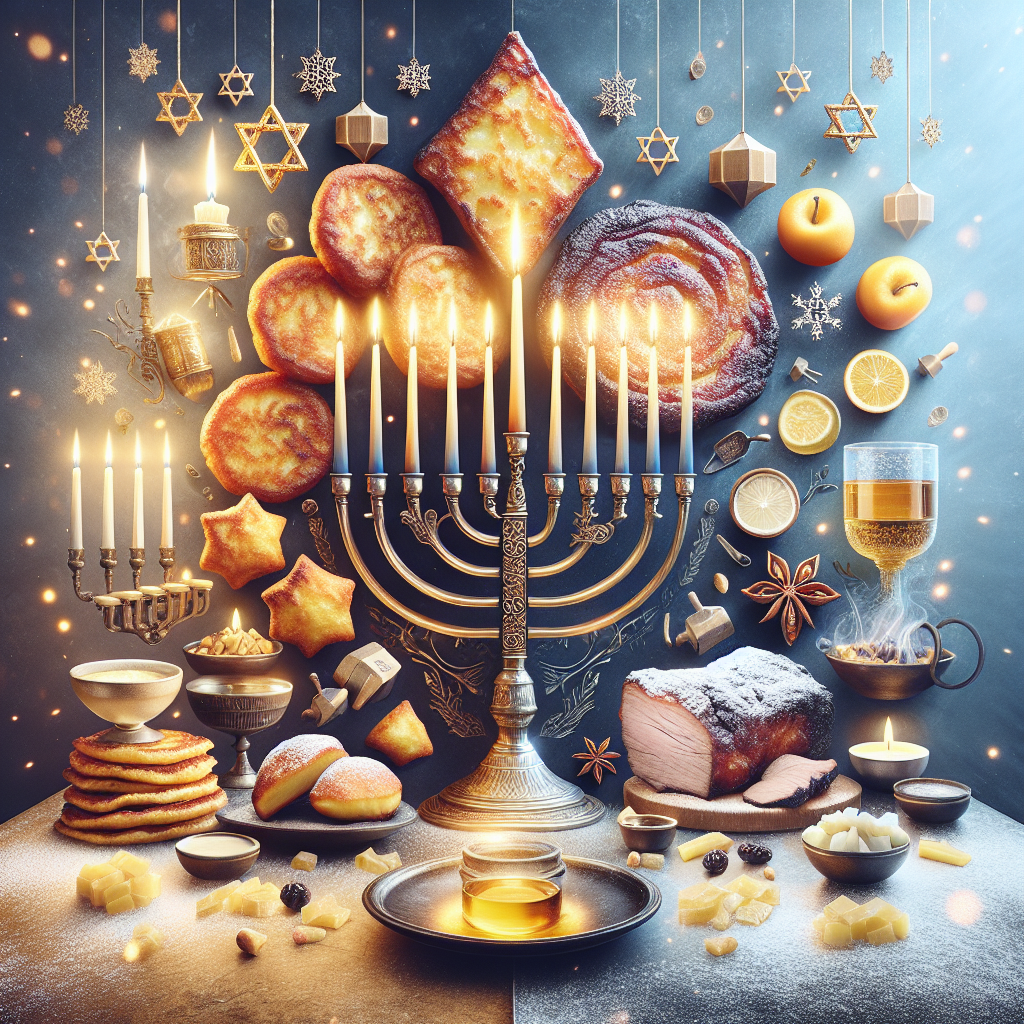
• Hanukkah is an eight-day Jewish festival known for its rich culinary traditions symbolizing historical events.
• Latkes, crispy potato pancakes, are a staple of Hanukkah, representing the miracle of the oil that lasted eight days.
• Sufganiyot, jelly-filled doughnuts, are especially popular in Israel, with variations including chocolate and caramel.
• Hanukkah meals often include brisket, a slow-cooked beef dish that fosters family gatherings.
• Kugel, a baked pudding made from noodles or potatoes, is a hearty traditional dish during the festival.
• Cheese is significant in Hanukkah lore, highlighted by blintzes, thin pancakes filled with cheese.
• The diversity of Hanukkah foods reflects the global Jewish diaspora, with each community contributing unique dishes.
• Sephardic and Mizrahi Jews add to the festival’s menu with dishes like bimuelos and sambusak.
As the Festival of Lights approaches, homes around the world are abuzz with preparations for Hanukkah. This eight-day celebration, steeped in history and tradition, is not only a time for reflection and festivity but also for savoring a diverse array of foods that hold cultural and spiritual significance. From crispy latkes to sweet sufganiyot, Hanukkah foods offer a delicious glimpse into Jewish heritage.
At the heart of Hanukkah’s culinary traditions is the story of the miraculous oil that lasted eight days during the rededication of the Holy Temple in Jerusalem. This miracle is commemorated by the consumption of foods fried in oil, symbolizing the enduring light. Among the most beloved of these are latkes, crispy potato pancakes that are a staple at Hanukkah tables. Often served with applesauce or sour cream, latkes are not only a flavorful delight but also a nod to the festival’s rich history.
Another quintessential Hanukkah treat is sufganiyot, delectable jelly-filled doughnuts. These sweet confections are particularly popular in Israel, where they are enjoyed by people of all ages. Traditionally filled with strawberry jelly, modern variations include a plethora of flavors such as chocolate, caramel, and even exotic fruit fillings. Each bite of these fluffy pastries is a celebration of the oil that played a crucial role in Hanukkah’s narrative.
Beyond these fried favorites, Hanukkah cuisine is rich with symbolism and diversity. Brisket, a slow-cooked, tender beef dish, often graces holiday tables, drawing families together in a shared meal. Its savory appeal and comforting warmth make it a cherished dish during the colder months of the year. Similarly, kugel, a baked pudding made from noodles or potatoes, offers a hearty accompaniment to the Hanukkah feast.
Cheese also holds a special place in Hanukkah celebrations, anchored in the tale of Judith, a Jewish heroine who used cheese to defeat an enemy general. Blintzes, thin pancakes filled with cheese, are a delightful nod to this aspect of Hanukkah lore. These delicate rolls, often topped with fruit or a dusting of powdered sugar, provide a sweet and satisfying conclusion to the meal.
The diversity of Hanukkah foods reflects the global Jewish diaspora, with each community adding its unique flavors and interpretations to the celebration. In addition to traditional Ashkenazi dishes, Sephardic and Mizrahi Jews bring their own culinary traditions to the table. For instance, bimuelos, a type of fried dough, are popular among Sephardic Jews, while Iraqi Jews enjoy sambusak, a savory pastry filled with spiced chickpeas.
As Hanukkah draws near, kitchens will fill with the enticing aromas of these beloved dishes, each one a testament to the resilience and vibrancy of Jewish culture. Whether passed down through generations or adapted to modern tastes, Hanukkah foods continue to illuminate the festival’s enduring spirit. Through each latke and sufganiyah, families come together, honoring tradition and creating new memories that will light their hearts for years to come.